China’s rapidly aging population presents significant challenges for fragility fracture care. Fragility fractures are a major cause of disability, functional decline, and mortality among older adults, highlighting the need for comprehensive, evidence-based approaches to prevention, treatment, and rehabilitation.
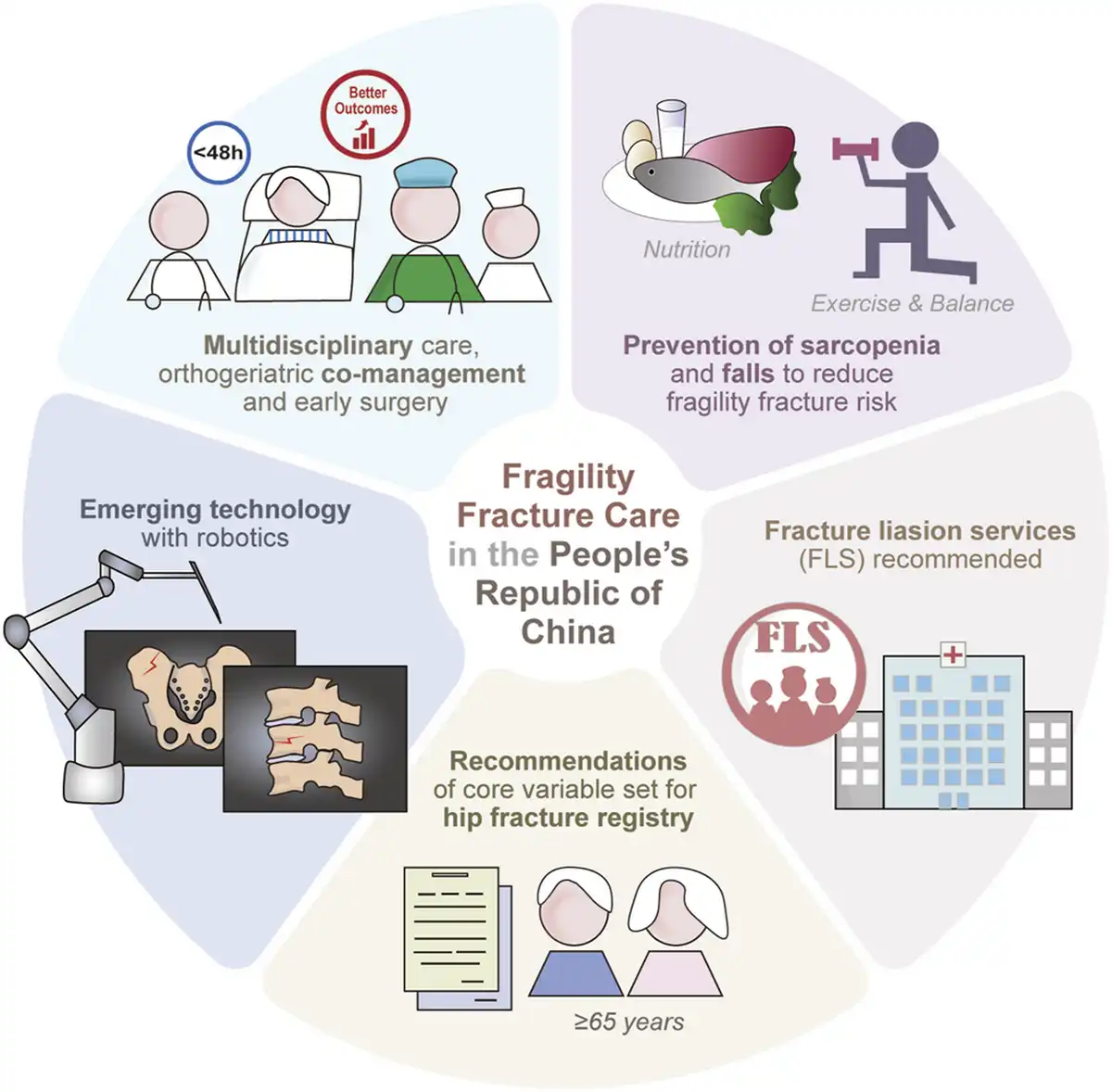
Recent advances in fracture management include the development of robotic-assisted surgical systems, which may improve fracture reduction accuracy, reduce intraoperative radiation exposure, and support minimally invasive procedures. For acetabular fractures, emerging surgical approaches, including acute total hip arthroplasty and combined hip procedures, may facilitate early weight-bearing and faster rehabilitation. However, further research is needed to establish the long-term outcomes of these surgical approaches and evaluate the effectiveness, safety, and cost-effectiveness of robotic-assisted surgery.
Multidisciplinary care and orthogeriatric co-management are essential components of hip fracture management. Evidence from a multicenter study involving 2,071 patients demonstrated that co-management improved clinical outcomes, reduced time to surgery, promoted early mobilization, and decreased one-year mortality. Further research has also demonstrated the cost-effectiveness of orthogeriatric co-management in China, highlighting its potential for broader implementation. These findings reinforce the importance of coordinated care involving orthopedic surgeons, geriatricians, rehabilitation professionals, and other healthcare providers.
Despite these advances, important gaps remain. China lacks a national hip fracture registry, limiting the systematic monitoring of care quality and patient outcomes. Although Fracture Liaison Services (FLSs) have been established in numerous hospitals, large-scale studies evaluating their nationwide implementation remain limited, and important gaps persist in post-fracture osteoporosis assessment and treatment. Strengthening these services could reduce subsequent fractures and improve long-term outcomes.
Sarcopenia and falls represent additional challenges. Sarcopenia is highly prevalent among older adults and patients with fragility fractures, contributing to mortality, recurrent fractures, and poor functional recovery. Resistance exercise, adequate nutrition, and integrated fall-prevention strategies are therefore essential. Community-based interventions combining balance and functional exercises with health education have demonstrated potential to reduce falls.
The central message is that improving fragility fracture care requires an integrated, multidisciplinary approach extending beyond surgery. Priorities include strengthening orthogeriatric co-management, expanding secondary fracture prevention, addressing sarcopenia and falls, establishing national registries, and evaluating innovative technologies. Large-scale pragmatic trials and real-world research are needed to guide implementation, improve quality of life, reduce mortality, and prevent recurrent fractures among older adults.
Read the article here.
© 2026 Global Fragility Fracture Network | All Rights Reserved I Designed by Aaron Knight