Due to its high rate of complications, mortality, functional impact, disability, and healthcare costs, hip fractures have become a public health issue worldwide. In many countries, significant efforts have been made in order to improve the prognosis of patients with hip fractures. The development of quality indicators (QIs) has been one of the most important initiatives among these efforts.
Used to objectively quantify and evaluate the healthcare processes and outcomes of a specific clinical condition, a quality indicator is a tool that can reduce variability in care between centers that treat the same condition. Other than that, QIs can promote equity and ensure more efficient use of healthcare resources.
Globally, although many healthcare institutions have proposed QIs for the management of fragility hip fractures, in Mexico, there was no proposal for that. Then, a recent study aimed to develop a comprehensive proposal for QIs regarding the care of patients with hip fractures in Mexican healthcare institutions.
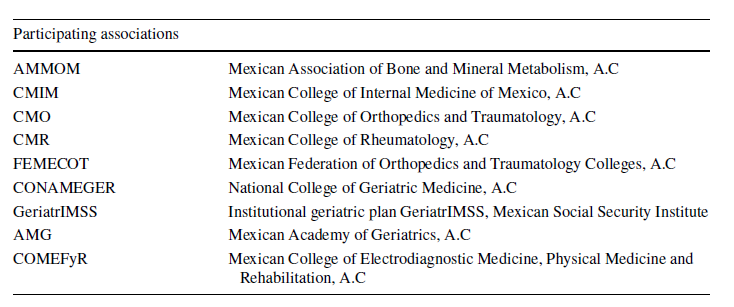
Three phases composed the study protocol: a systematic review of the literature; a RAND/UCLA (Research and Development) type consensus to obtain significant agreements among nine different medical societies; and the evaluation of QIs based on the opportunity and necessity criteria.
Mexican Associations involved in the study protocol
After the consensus, a total of 33 QIs was identified. Among them, there is coverage of presurgical, trans-surgical, post-surgical, and perioperative phases of care. Key indicators include timely surgery (within 48 h), early mobilization, orthogeriatric co-management, nutritional assessment, fall prevention, delirium detection, and secondary fracture prevention upon discharge.

Quality Indicators Identified after the Consensus
The 33 indicators selected by a panel of interdisciplinary experts have the potential to improve care outcomes, reduce costs and complications, and standardize the quality of multidisciplinary health care provided to patients with hip fragility fractures.
For the authors, these indicators can contribute to the promotion of projects, such as regional, national, or institutional registries of fragility hip fractures, which allow identifying areas of opportunity to improve the quality of comprehensive medical care. They say it is essential to recognize that the continuous application and constant assessment of these indicators are crucial aspects for their refinement, both at a conceptual and operational level. The recurring evaluation will reflect the maturity of the orthogeriatric teams in Mexico and will guarantee the relevance and effectiveness of the indicators over time.
Read the paper here
© 2026 Global Fragility Fracture Network | All Rights Reserved I Designed by Aaron Knight