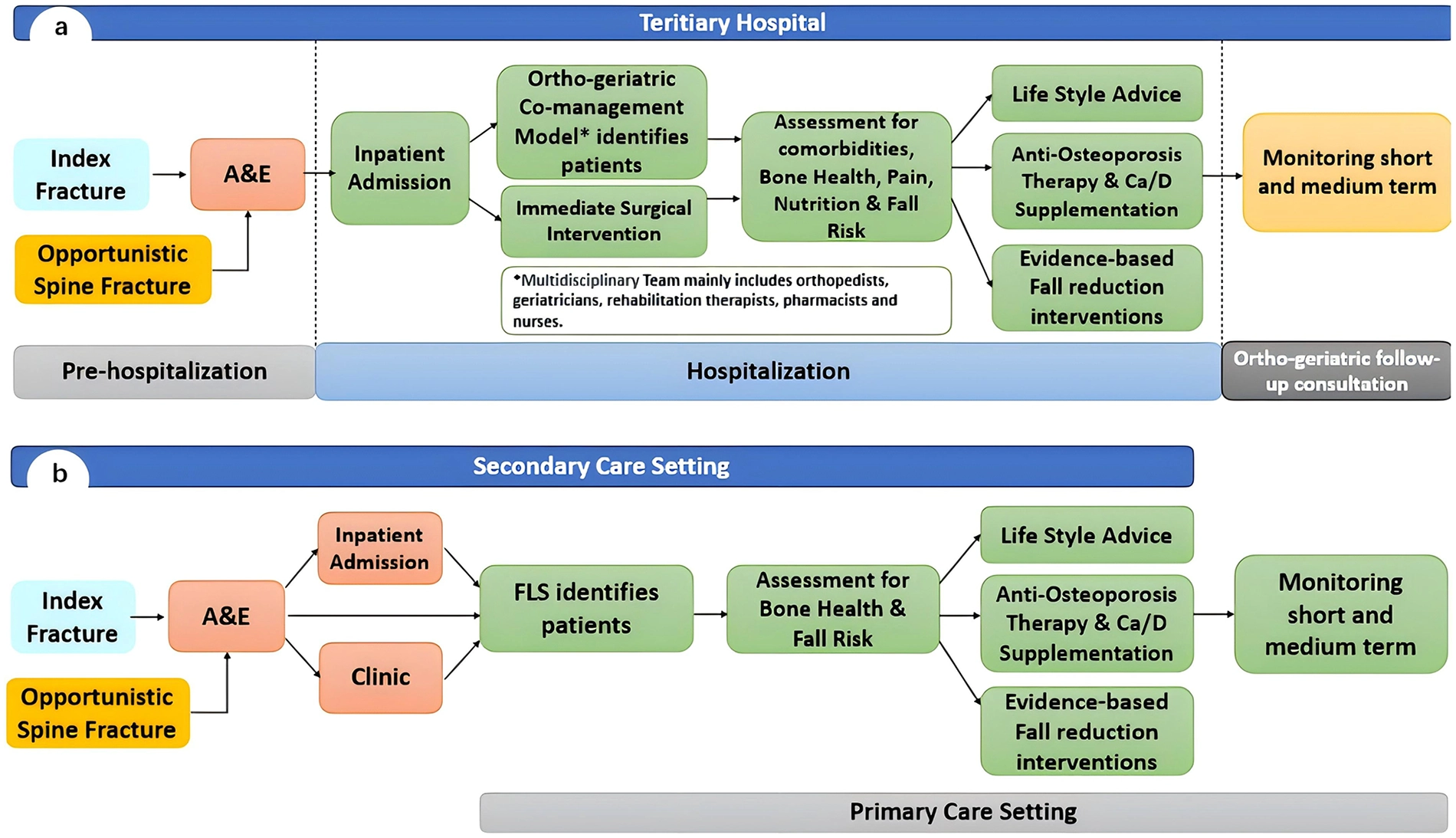
A recent study benchmarked secondary fracture prevention after hip fracture in a Chinese tertiary hospital against United Kingdom Fracture Liaison Service (FLS) Key Performance Indicators (KPIs). Researchers retrospectively analyzed 2,689 patients aged ≥60 years who underwent hip fracture surgery between 2016 and 2018 in an orthogeriatric co-managed ward.
Key findings
● Inpatient care performance was outstanding:
○ 97.1% underwent bone mineral density assessment (using DXA and/or QCT), exceeding UK benchmark performance.
○ 94.0% received anti-osteoporosis medication before discharge.
○Both indicators demonstrated excellent inpatient secondary fracture prevention.
● Post-discharge follow-up declined dramatically:
○ 50.7% at 90 days.
○ 17.7% at 12–16 weeks.
○ Only 9.5% completed the 12-month follow-up.
● Despite high treatment initiation rates, secondary fracture rates remained consistently around 11–13% across the care cascade.
Why does it matter?
The Chinese hospital-centered orthogeriatric model demonstrates excellent acute fracture care but highlights a major gap in long-term secondary fracture prevention. Poor follow-up and limited integration between hospitals, primary care, and community services likely contribute to reduced treatment persistence and ongoing fracture risk despite high rates of inpatient osteoporosis management. The authors recommend prioritizing:
● Dedicated FLS coordinators.
● Digital patient engagement and follow-up tools.
● Stronger hospital–primary care integration.
● Community-based rehabilitation and adherence programs.
While orthogeriatric co-management can achieve excellent inpatient secondary fracture prevention after hip fracture, sustained reductions in refracture risk require structured long-term follow-up, dedicated care coordination, and stronger integration between hospitals, primary care, and community rehabilitation services.
Read the article here.
© 2026 Global Fragility Fracture Network | All Rights Reserved I Designed by Aaron Knight