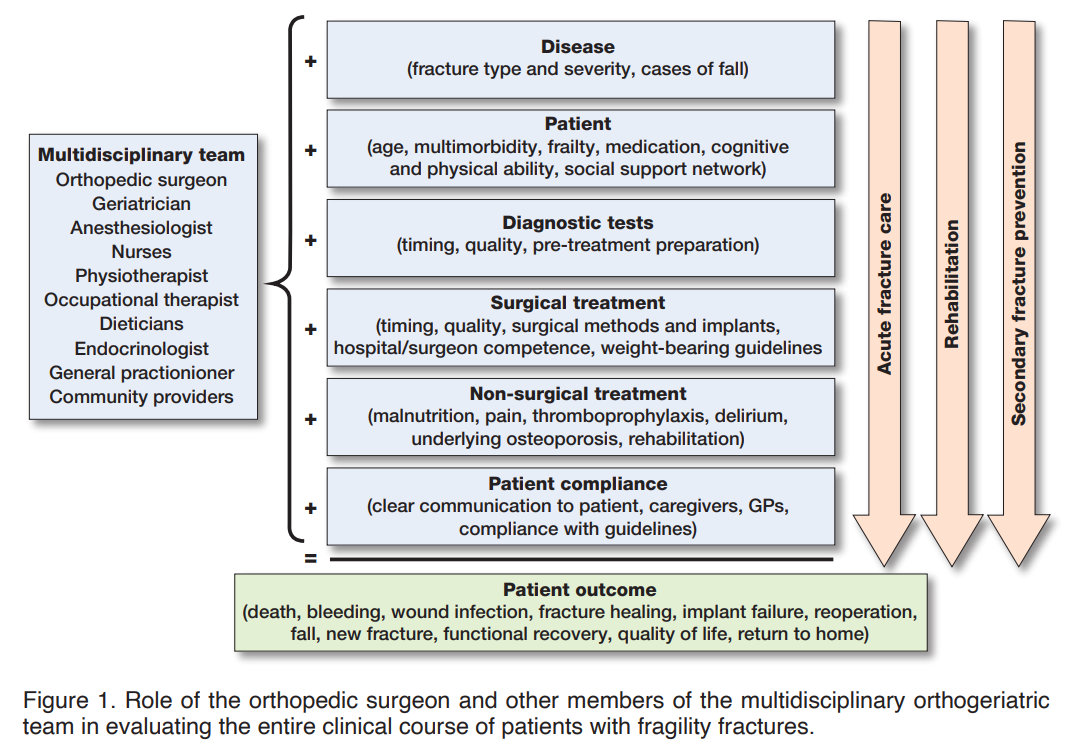
A recent perspective in Acta Orthopaedica, Pedersen and colleagues highlight the central role of orthopedic surgeons within the Fragility Fracture Network (FFN). Orthopedic surgeons are uniquely positioned to lead and facilitate collaboration across specialties—from acute fracture management and early mobilization to rehabilitation and long-term secondary fracture prevention.
The article also describes the growing development of national FFN organizations in Nordic countries, which aim to strengthen interdisciplinary collaboration, education, and the implementation of best practices such as Fracture Liaison Services (FLS).
Some highlights in the development of the Nordic national FFNs include:
FFN Norway, established in 2018 and with around 700 members, has initiated activities such as hosting annual meetings, developing an interdisciplinary hip fracture guideline, revising physiotherapy and early rehabilitation guidelines, and publishing secondary prevention guidelines.
FFN Netherlands, established in 2023, currently focuses on strengthening the roles of nurses and nurse practitioners through FLS.
FFN Denmark, also established in 2023 and with around 386 members, has organized two national meetings featuring sessions on different patient care topics. It is also leading a multidisciplinary initiative to implement FLS in all Danish hospitals starting in January 2026, in collaboration with the Danish Osteoporosis Association and six other medical societies.
FFN Sweden, established in 2025, plans to work closely with other relevant organizations to improve multidisciplinary care for patients with fragility fractures and strengthen fracture prevention through increased awareness, educational programs, and advocacy for policy change.
As the burden of fragility fractures continues to grow, the authors argue that orthopedic surgeons should actively engage in multidisciplinary initiatives like FFN to improve patient outcomes, prevent subsequent fractures, and support recovery, independence, and quality of life.
Read the article here.
© 2026 Global Fragility Fracture Network | All Rights Reserved I Designed by Aaron Knight