Hip fractures have emerged as a major public health challenge, with incidence rates projected to increase exponentially with age. They are among the most devastating injuries involving older adults worldwide. Cognitive impairment significantly affects these patients, worsening their outcomes. Despite compelling evidence, implementation of systematic cognitive assessment in hip fracture care remains inconsistent. Considering that, a prospective audit developed at the Northwick Park Hospital in Harrow – England, aimed to confront the critical gap between evidence and practice in fragility hip fracture care.
Patients aged 65 years and older admitted with an acute hip fracture, requiring surgical intervention, were eligible for inclusion in the protocol, which consisted of 2 cycles:
An intervention package targeted identified barriers to cognitive assessment completion. A staff education program tracked the Abbreviated Mental Test Score (AMTS) documentation at four junctures: admission, postoperative days 1-2, and the day. Workflow integration incorporated cognitive assessment into clinical pathways. An audit feedback mechanism provided monthly performance reports shared with the team.
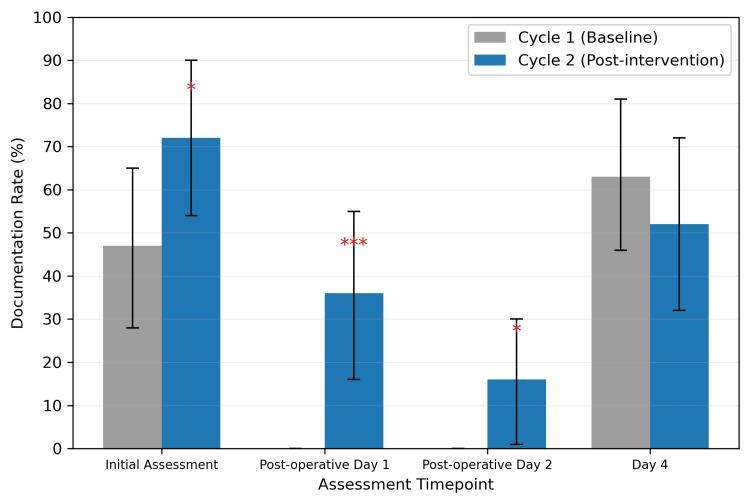
Changes occurred in a noticeable way, but they were not brought to completion. Initial AMTS documentation improved from 46.7% to 72% between cycles. Postoperative day 1 assessments, absent at baseline, increased to 36% completion rate, and day 2 assessments climbed from zero to 16%. However, orthogeriatric day 4 assessments fell from 63.3% to 52%, suggesting intervention fatigue.
This audit demonstrates that targeted quality interventions can improve cognitive assessment practices in elderly hip fracture patients. The multifaceted intervention achieved significant improvements, with the most notable achievement being the establishment of systematic post-operative cognitive monitoring practice, that was absent at baseline.
For the authors, “strategic interventions can revolutionize cognitive assessment practices, particularly for initial screening, but sustaining these gains demands more than one-time fixes.”
Read the article here: Enhancing Cognitive Impairment Assessment and Management in Hip Fracture Patients: A Two-Cycle Clinical Audit | Cureus
© 2026 Global Fragility Fracture Network | All Rights Reserved I Designed by Aaron Knight