Hip fractures are associated with substantial disability, morbidity, mortality and healthcare costs. Although fracture risk assessment tools such as FRAX and QFracture are available, these commonly require information obtained through patient assessment, including body mass index and lifestyle factors such as smoking and alcohol use. A prediction tool relying exclusively on routinely collected healthcare data could enable automated population screening and identify high-risk individuals before a fracture occurs.
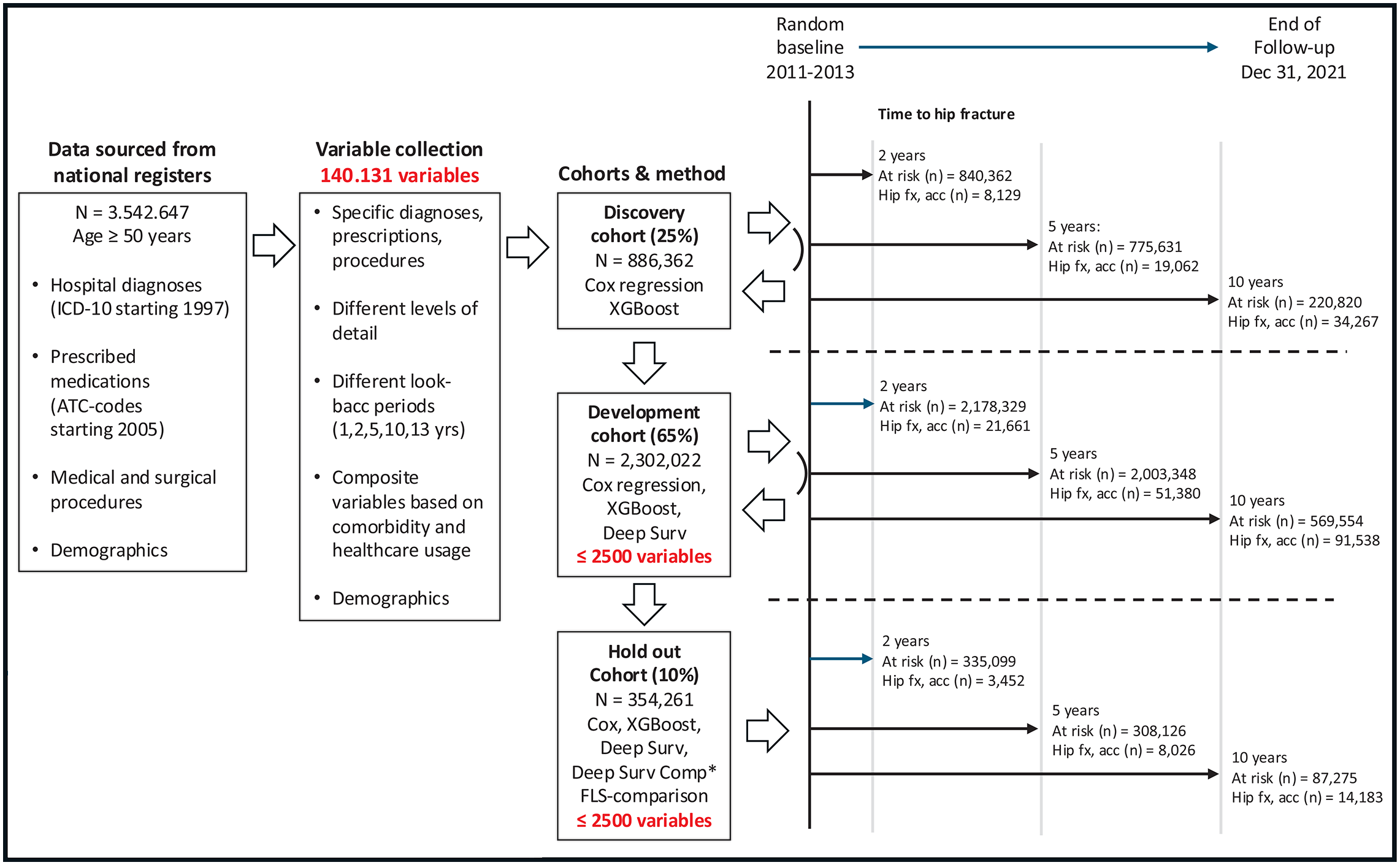
This nationwide Swedish cohort study included 3,542,647 individuals aged ≥50 years who had not been prescribed osteoporosis medication during the previous two years, with a median follow-up of approximately 9 years. During follow-up, 142,327 hip fractures occurred. Using national registry data encompassing diagnoses, prescribed medications, procedures, demographic and socioeconomic information, the researchers developed FRACTURE-ML, a clinical decision support tool for hip fracture prediction. DeepSurv and XGBoost machine-learning models were evaluated alongside traditional Cox regression models.
The DeepSurv-based FRACTURE-ML model demonstrated excellent discrimination, achieving an AUC of 0.89 at one year, with high predictive performance maintained over longer follow-up. A simplified model using only 35 predictors showed similar performance, while traditional Cox models achieved comparable discrimination and calibration.
Compared with an approach using recent fracture as a proxy for FLS-based secondary prevention, FRACTURE-ML identified nearly seven times more individuals at risk of hip fracture within two years, with a reduction in specificity. Importantly, the authors emphasize that the approaches should not be viewed as competing: FRACTURE-ML could complement established FLS programmes by identifying additional individuals for primary prevention, while FLS targets people who have already sustained a fracture.
These findings suggest that automated use of routinely available healthcare data could provide a resource-efficient population screening strategy. Individuals identified as being at elevated risk could subsequently undergo targeted evaluation, including assessment of physical function, balance and bone mineral density, followed by appropriate interventions such as fall prevention and osteoporosis treatment.
However, external validation in other countries and implementation studies are still needed to establish the clinical utility and generalizability of FRACTURE-ML before widespread implementation in routine practice.
Read the article here.
© 2026 Global Fragility Fracture Network | All Rights Reserved I Designed by Aaron Knight