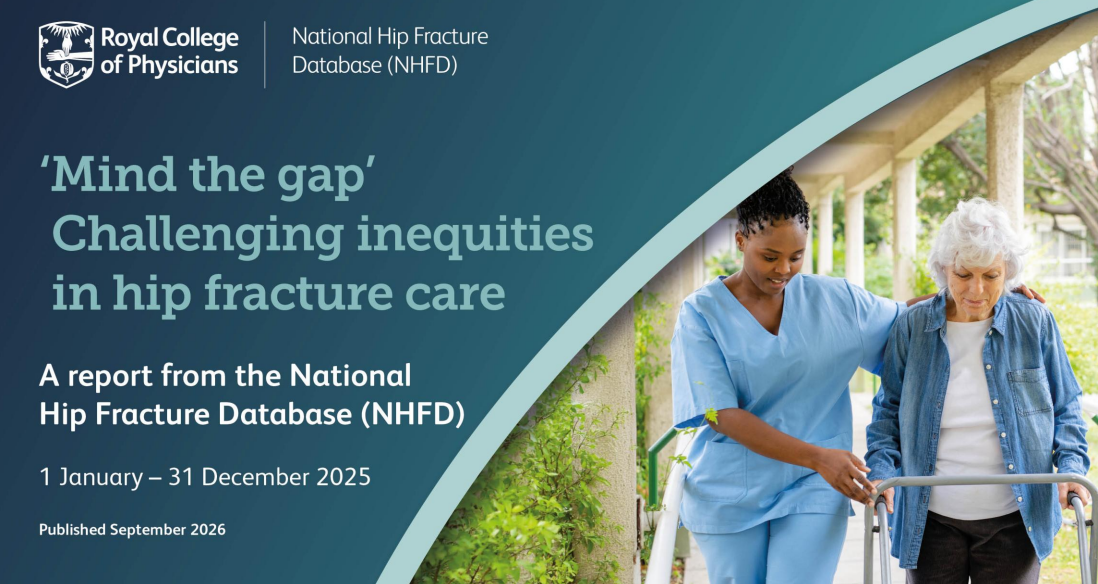
The 2026 National Hip Fracture Database (NHFD) annual report, Mind the Gap, highlights persistent and substantial variation in the quality and outcomes of hip fracture care across hospitals in the UK. While patient characteristics such as age, sex, ethnicity and socioeconomic status influence risk and outcomes, the report finds that where a person is treated has an even greater impact. Thirty-day mortality ranged from 3.0% among patients treated in the best-performing fifth of hospitals to 8.1% in the poorest-performing fifth, compared with only a 1% mortality gap between the most and least socioeconomically deprived groups.
Delirium emerges as a major and actionable area for improvement. It is described as a common, preventable and treatable complication associated with markedly poorer outcomes. Patients with delirium are three times more likely to die during admission and three times more likely to require discharge to a care home. Yet routine delirium assessment remains inconsistent. In 2025, admission 4AT screening rates ranged from 0% to 100% between hospitals, despite national standards requiring older emergency patients to be assessed promptly. The NHFD therefore recommends mandating and monitoring routine 4AT screening for all patients admitted with hip fracture.
The report also identifies variation in access to physiotherapy, governance processes and secondary fracture prevention. It calls for stronger monthly clinical governance, wider Fracture Liaison Service provision, and extension of audit-driven improvement beyond hip fracture to other fragility fractures. Overall, the report reinforces that better outcomes depend not only on evidence-based standards, but on reliable, equitable implementation across every hospital care pathway.
Read the report here.
Turning awareness into action
Delirium can dramatically change a patient’s experience of fragility fracture and their recovery. Yet with the right knowledge, early recognition and coordinated care, we can make a difference.
Responding to this important challenge, the Fragility Fracture Network has developed its new educational module:
Best Practice in Delirium Care Following Fragility Fracture
Access the module here.
© 2026 Global Fragility Fracture Network | All Rights Reserved I Designed by Aaron Knight