This nationwide retrospective cohort study examined whether different orthogeriatric care models were associated with mortality and healthcare costs among patients aged 80 years or older with hip fractures in Germany. Using AOK health insurance claims, the study included 7,219 patients treated across 121 certified orthogeriatric centers, with index hip fracture admissions between 2014 and 2018 and follow-up data available through 2019.
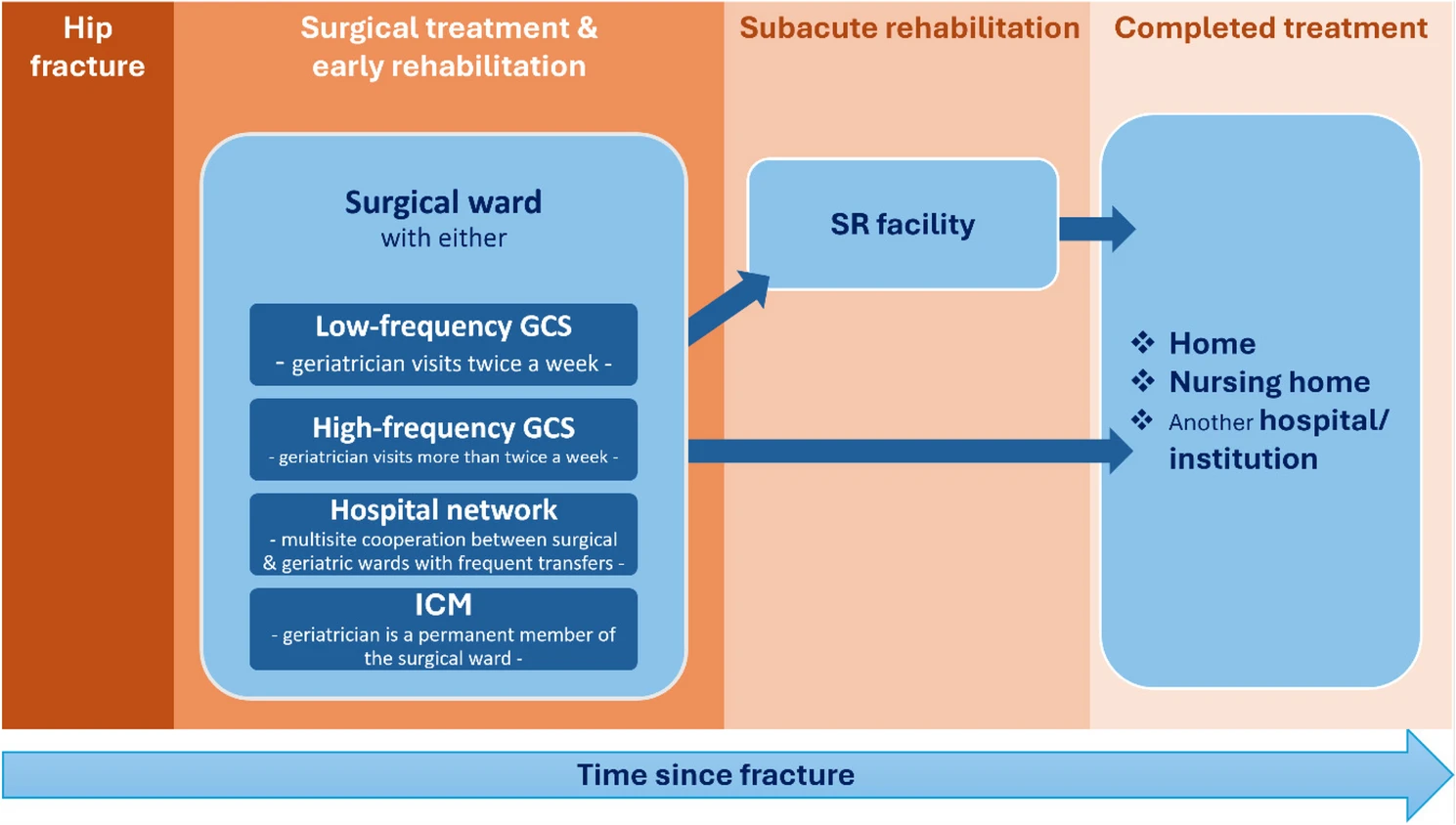
Hospitals were classified into four orthogeriatric care models according to the organization and intensity of geriatric involvement:
● Low-frequency geriatric consultation service (GCS) – two geriatric visits per week.
● High-frequency GCS – more than two visits per week.
● Hospital networks – multisite cooperation involving geriatric consultation in the surgical hospital and structures enabling transfer to external geriatric wards for early rehabilitation.
● Integrated Care Model (ICM) – geriatricians are permanent members of the surgical team, with geriatric and trauma expertise jointly integrated into patient care and decision-making.
The findings indicated that the intensity and consistency of geriatric involvement were associated with survival. ICM hospitals had the lowest adjusted 30-day death hazard, while hospital networks had the lowest death hazard between 30 and 180 days. Compared with low-frequency GCS, ICM was associated with a 28% lower 30-day death hazard (HR 0.72), while hospital networks were associated with a 20% lower hazard between 30 and 180 days (HR 0.80). Both differences were statistically significant.
The early advantage of ICM may reflect immediate and continuous geriatric involvement, multidisciplinary management of complications such as pain, hypotension and delirium, and earlier initiation of early complex geriatric rehabilitation (EGR). In hospital networks, the survival advantage appeared later, after many patients had been transferred to external geriatric wards where EGR was provided. High-frequency GCS also showed a modest reduction in death hazards compared with low-frequency GCS, although the interval-specific differences were not statistically significant after adjustment for multiple comparisons.
Despite differences in care pathways, mean combined costs for the index hospital stay and subsequent subacute rehabilitation were similar across all four models, with no statistically significant adjusted cost differences. Differences in EGR timing, length of stay and transfer patterns appeared to offset one another economically. In hospital networks, EGR after transfer was associated with higher treatment costs, but fewer patients subsequently required subacute rehabilitation, helping balance overall expenditure.
The authors conclude that orthogeriatric outcomes depend not simply on whether geriatric expertise is available, but also on how intensively geriatricians are involved, the frequency of their involvement, and the organization of postoperative care across institutions. ICM and hospital networks had the lowest 180-day mortality, with similar outcomes for high-frequency GCS, while mean costs remained comparable across models.
Read the article here.
© 2026 Global Fragility Fracture Network | All Rights Reserved I Designed by Aaron Knight