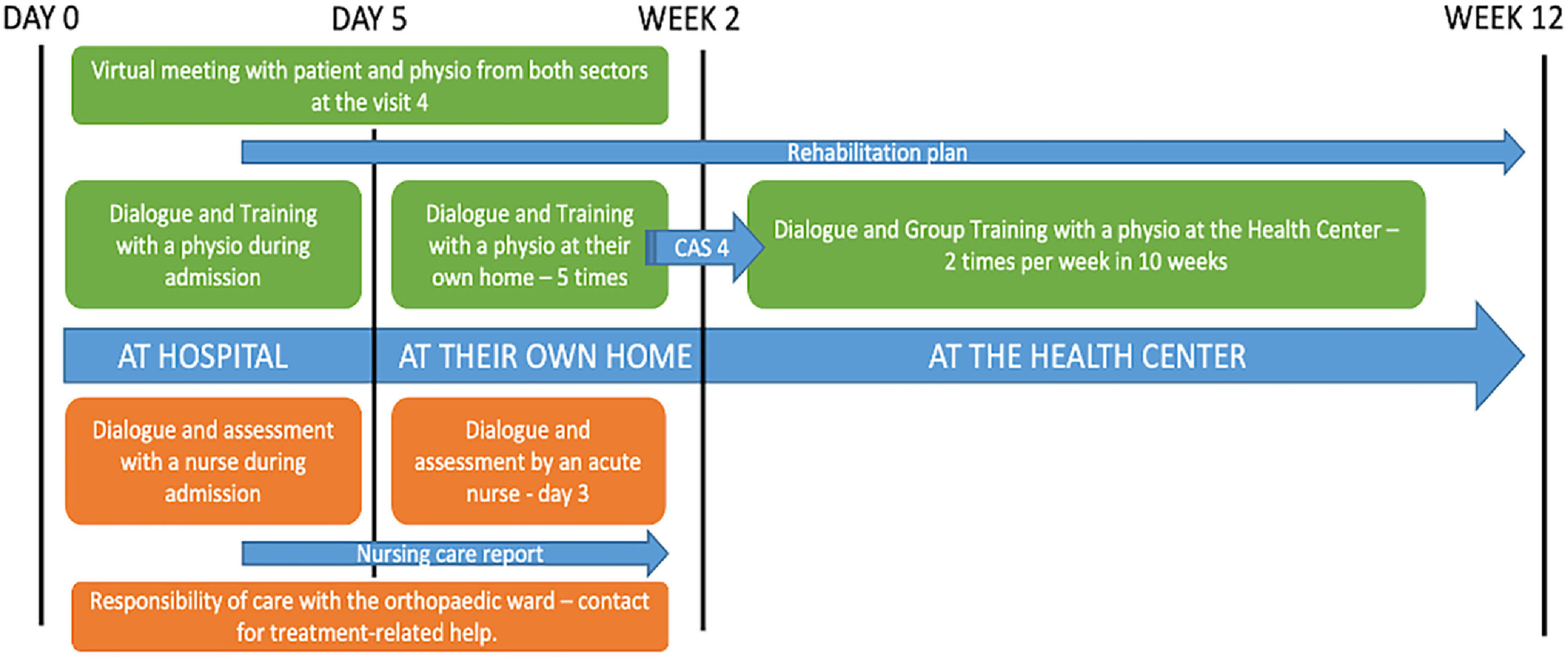
A recent qualitative study explored healthcare professionals’ experiences of “Rehabilitation for Life,” a Danish 12-week, cross-sectoral rehabilitation programme for older adults following hip fracture. The programme integrates early rehabilitation during hospitalisation, home-based support, progressive strength training, centre-based group exercise, patient empowerment, and coordination between hospital and municipal services.
Sixteen experienced healthcare professionals—seven nurses and nine physiotherapists—from one hospital and six municipalities participated in four focus-group interviews. The interview data were systematically reviewed to identify common themes in professionals’ experiences of delivering the programme.
Three central themes emerged. First, structured rehabilitation plans provided professionals with a clear framework for care, strengthened confidence, reduced uncertainty, and supported consistency across settings. However, some participants considered virtual meetings unnecessary when the rehabilitation pathway and required actions were already well understood.
Second, healthcare centres were viewed as important social and motivational environments. Professionals observed that group-based rehabilitation allowed patients to interact with others experiencing similar challenges, gain reassurance, become more engaged, and take greater ownership of their recovery. Attending the centre also gave patients a sense of purpose and encouraged active participation.
Third, professionals highlighted the challenge of balancing progressive strength training with functional rehabilitation. Some patients, including individuals initially considered unlikely to tolerate intensive exercise, responded well to increased training loads. Nevertheless, many patients were more motivated by everyday goals such as walking independently, climbing stairs, completing household activities, and visiting friends.
Overall, the findings emphasise structured but adaptable rehabilitation pathways, early and continuous rehabilitation, shared professional understanding, cross-sector collaboration, and alignment between strength training and patients’ functional goals and daily lives.
Read the article here.
© 2026 Global Fragility Fracture Network | All Rights Reserved I Designed by Aaron Knight