Population ageing is expected to drive a substantial increase in hip fractures across Africa. Evidence from The Gambia, South Africa, and Zimbabwe highlights the urgent need for reforms to reduce delays, improve access to surgery and rehabilitation, and prevent long-term disability.
Key Insights from the Fractures-E3 Study:
● The Looming Crisis: Hip fracture numbers are projected to rise sharply, including an estimated fourfold increase in The Gambia over the next 30 years.
● Devastating Impact: Among the 71% of patients in Zimbabwe who survived to 12 months, 97% continued to experience pain and 98% remained disabled.
● The Cost Barrier: In Zimbabwe, surgical admissions cost an average of US$3,887, largely paid out of pocket and creating catastrophic financial burdens for patients and families. In South Africa, the estimated cost was US$6,935 per patient.
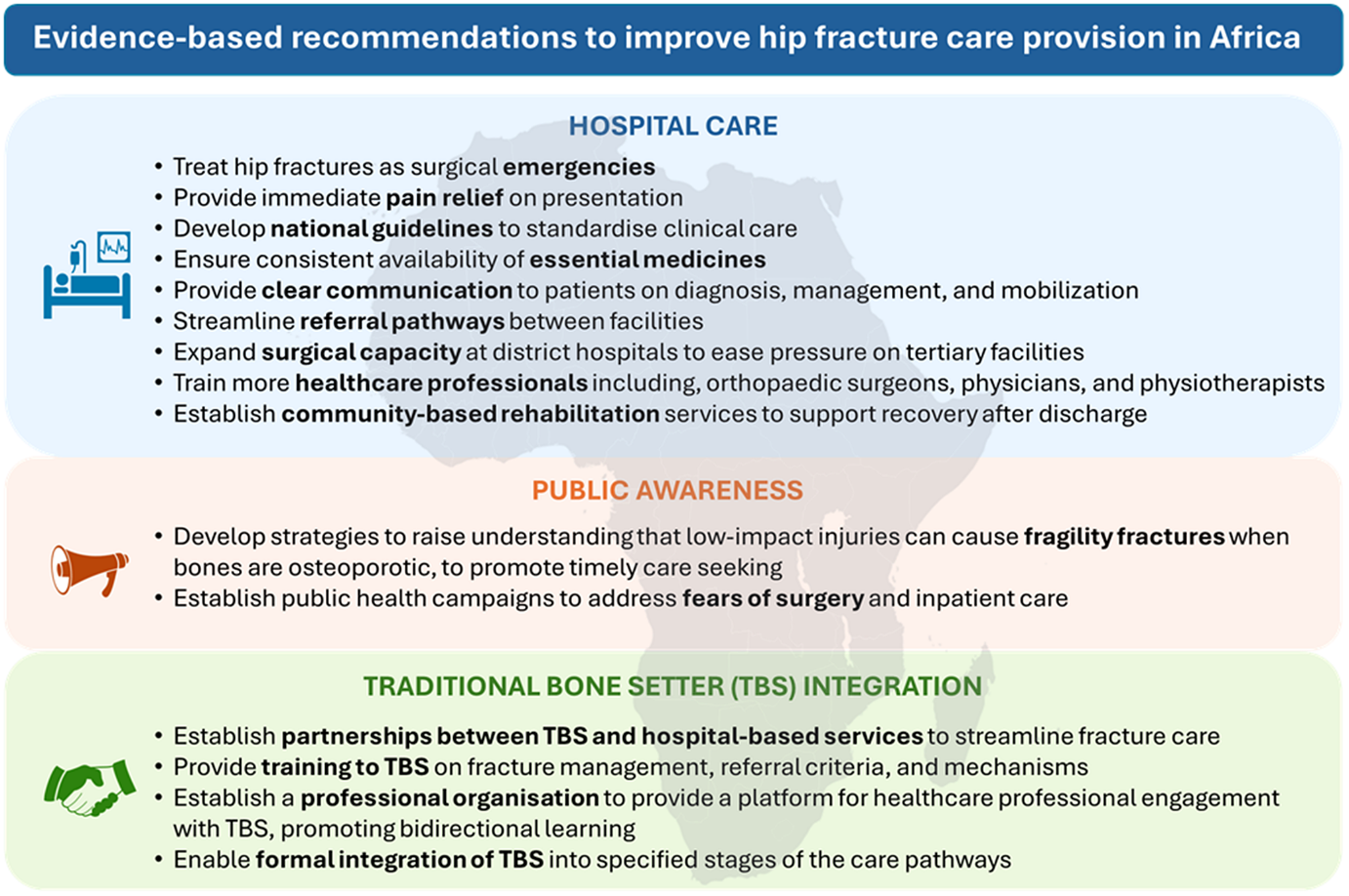
● Systemic Gaps: In Zimbabwean public hospitals, patients waited an average of 20 days for surgery. Across the countries studied, care was affected by staff shortages, limited surgical capacity, medicine stock-outs, inadequate imaging services, fragmented referral pathways, and inconsistent clinical practices.
Actionable Recommendations:
Read the article here.
© 2026 Global Fragility Fracture Network | All Rights Reserved I Designed by Aaron Knight