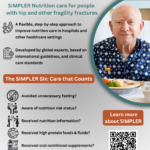
Sarcopenia, the age-related loss of muscle mass and function, is highly prevalent among people with fragility fractures. Many also experience osteoporosis and sarcopenia together, a condition increasingly recognised as osteosarcopenia. This combination is associated with poorer mobility, increased falls, greater dependency, higher rates of institutionalisation, and increased mortality.
A recent umbrella review, synthesising five systematic reviews, including two network meta-analyses, found that combined exercise and nutrition interventions are the most effective strategy for improving muscle strength, skeletal muscle mass, gait speed, sit-to-stand performance, and reducing falls in older adults.
Key recommendations include:
Progressive resistance and balance training.
Optimised protein intake and adequate vitamin D.
Multidisciplinary care involving dietitians, physiotherapists, geriatricians, nurses, and others working together.
Why does this matter for fragility fracture care?
Despite strong evidence, nutrition (“Fuel”) and exercise/mobilisation (“Move”) are often delivered separately rather than as a coordinated intervention. Recovery, mobility, independence, and secondary fracture prevention are most likely to improve when nutrition and exercise are delivered together.
Read the article here.
© 2026 Global Fragility Fracture Network | All Rights Reserved I Designed by Aaron Knight