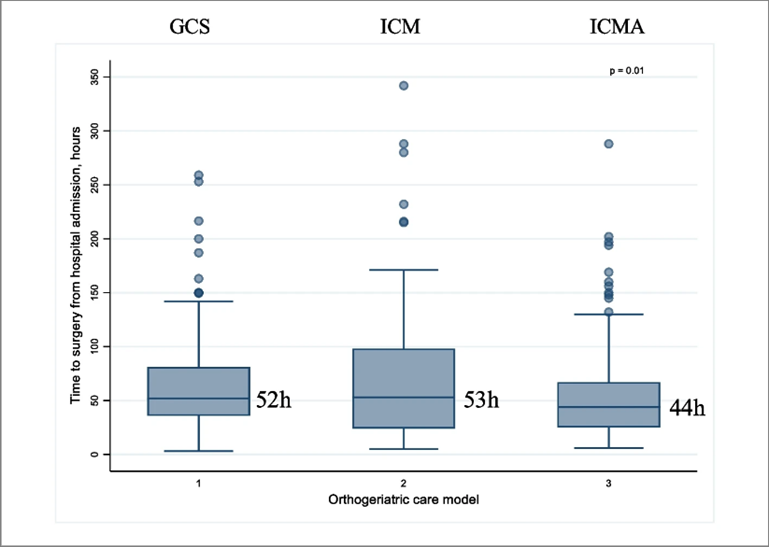
In hip fracture, the interval between admission and surgery, known as time to surgery (TTS), is an important determinant of prognosis. Reducing TTS remains a central goal in trauma management for older patients, regardless of the orthogeriatric model adopted. This study evaluated the impact of three sequential orthogeriatric care models on TTS and patient outcomes in older adults with hip fracture.
This observational, retrospective, single-centre study was conducted in a French orthogeriatric unit from August 2015 to October 2021, comprising three care models conducted sequentially:
1. Geriatric Consultant Service (GCS)
2. Integrated Orthogeriatric Care Model (ICM)
3. Integrated Orthogeriatric Care Model with Anaesthetist (ICMA)
During the ICMA period, TTS decreased significantly despite higher comorbidity and anticoagulant use compared to GCS period. The inclusion of an anaesthetist in daily multidisciplinary rounds enhanced perioperative coordination, particularly in analgesia and anticoagulation management, and promoted the use of regional nerve blocks within a multimodal analgesic approach.
Although the population became progressively older and more comorbid, and had more medical complications during the stay, mortality remained stable, ICU transfers decreased, and mobility at discharge improved under the ICMA model.
This study demonstrates that the organisation of care directly affects surgical timeliness and outcomes in geriatric hip fracture management. The collaborative model involving orthopaedic surgeons, geriatricians, and anaesthetists optimised processes, reduced TTS, and improved patient recovery. Strong professional values, clear communication, and institutional support are essential to sustain these improvements in orthogeriatric care.
© 2026 Global Fragility Fracture Network | All Rights Reserved I Designed by Aaron Knight